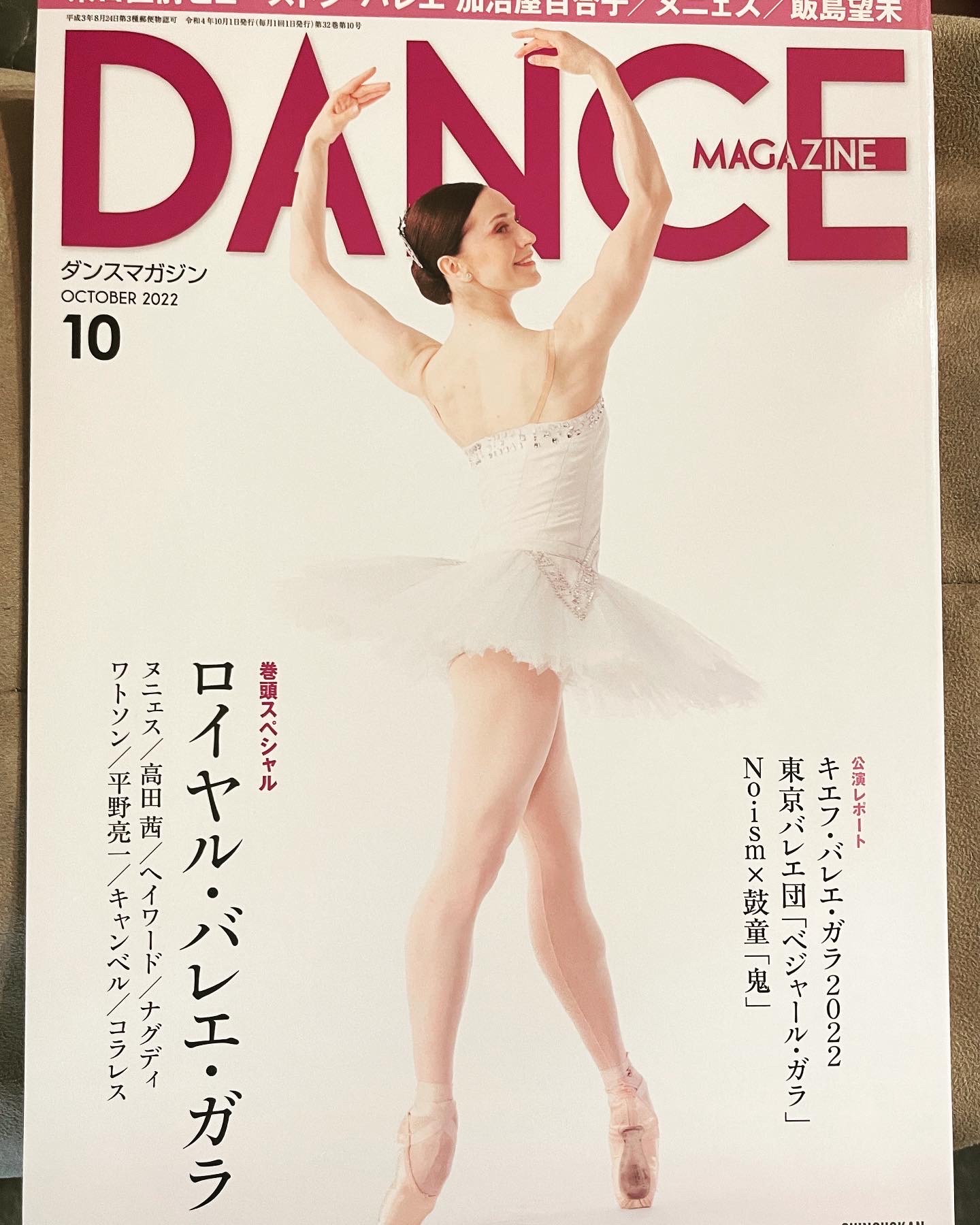
In advance of Houston Ballet’s tour to Tokyo this fall, I was asked to write a brief history and summary of the company for the October issue of Japan’s SHINSHOKAN Dance Magazine. The following is the article in English.
Houston Ballet Past and Present: Aiming for Shining Stars
“Houston” was the first word spoken in official transmission from the surface of the moon. Only two months before NASA astronauts made that famous inaugural lunar landing, the Texas metropolis nicknamed Space City launched its own professional ballet company. Debuting in May 1969 with just 16 dancers during its first professional season, Houston Ballet has since grown to a company of nearly 60 dancers, making it the fifth largest ballet company in the United States.
The history of Houston Ballet begins as many American ballet companies do, with the Ballet Russes de Monte-Carlo, a company that toured extensively throughout the country during World War II and inspired the development of schools and companies in multiple urban areas, including subtropical Houston. Recognizing it as important groundwork needed for the launch of a professional company, arts advocates who established a foundation for ballet in Houston in 1955 sponsored an academy for the training of dancers. From its earliest days, outreach to all in the community, including those at an economical disadvantage, was emphasized. Today, Houston Ballet Academy attracts some of the best young talent in the world, training more than 1,000 students every year and boasting a second-tier performance ensemble, Houston Ballet II, whose members consistently pass into the professional performance company.
In 2011 Houston Ballet opened its $46.6 million state-of-the-art Center for Dance, currently the largest professional dance facility in America. In this space, the Houston Ballet Academy and professional company train and rehearse just a stone’s throw from their performance home, the Wortham Theater Center. Houston Ballet has come a long way since its fledgling years when a small two-studio rehearsal space served the company’s gradual expansion of touring beyond Texas.
During nearly three decades of leadership by Ben Stevenson, O.B.E., Houston Ballet grew from a regional ballet ensemble to a respected and internationally-acclaimed performing arts organization. Touring increased throughout the United States, raising the company’s national image and the company attracted dancers from all over the world. During his 27-year tenure of artistic direction, Stevenson greatly enriched the company’s repertoire with his own full-length classics, bravely acquired works by some of the world’s most respected choreographers, and nurtured artists from within the ranks of the company, some who themselves have earned world-wide recognition as choreographers.
Houston Ballet’s current artistic director Stanton Welch built upon this established foundation and invigorated the company to reach ambitious goals in the 21st Century. These have included raising the caliber of male dancers throughout the company’s ranks, adding works by important choreographers such as Kylián, Robbins and Balanchine to the repertoire for consistent placement in each season’s programming, and introducing Houston audiences to world-renowned contemporary dancemakers like Jorma Elo, Aszure Barton, Alexander Ekman, and most recently, Justin Peck. The Australian-born Welch also continues the tradition of personally creating new narrative ballets and revising and upgrading company mainstays like The Nutcracker, Romeo and Juliet and Swan Lake. The latter will be performed for the first time in company history for audiences in Tokyo, Japan, Oct. 29-30.
Flourishing under the watchful eyes of two long-term directors and some of the best ballet coaches in the world, Houston Ballet dancers are well-trained actors with strong dramatic and comedic timing in addition to being virtuosic technical dancers. Known for their versatility, its members are praised and appreciated by choreographers commissioned to create new work on the company.
Throughout its 50-plus years, Houston Ballet has shown immense resiliency. This was most evident during a year of displacement from their performance space following the flooding and devastation caused to the city’s theater district by Hurricane Harvey. In 2020, the company continued operations and created new work despite being physically distanced, and continues to expertly navigate numerous disruptions like shipping delays and last-minute casting changes related to the Covid-19 pandemic.
Thanks to this enduring spirit of its company members, staff and leadership, as well as the unwavering support of individuals committed to producing and maintaining world-class dance in their home city, Houston Ballet has skyrocketed beyond the moon, reached for the stars and secured its place among America’s great ballet companies.


ニシェル・スザンヌ
(Nichelle Suzanne)
 Nichelle Suzanne Strzepek